

This article asks: how can a business benefit from access control? We look at who uses access control systems, what an access control system does, and whether an access control security system is right for your business.
Access control is about deciding who can enter, what they can see, and what they can do. It helps businesses protect people, property, data, and sensitive information. It also supports compliance and gives you peace of mind because you can manage access in a clear, secure way.
What is an Access Control System?
An access control system is a set of security measures that control access to places, devices, and information. It can be used for physical security, like doors in a building, and for logical access, like computer systems and data.
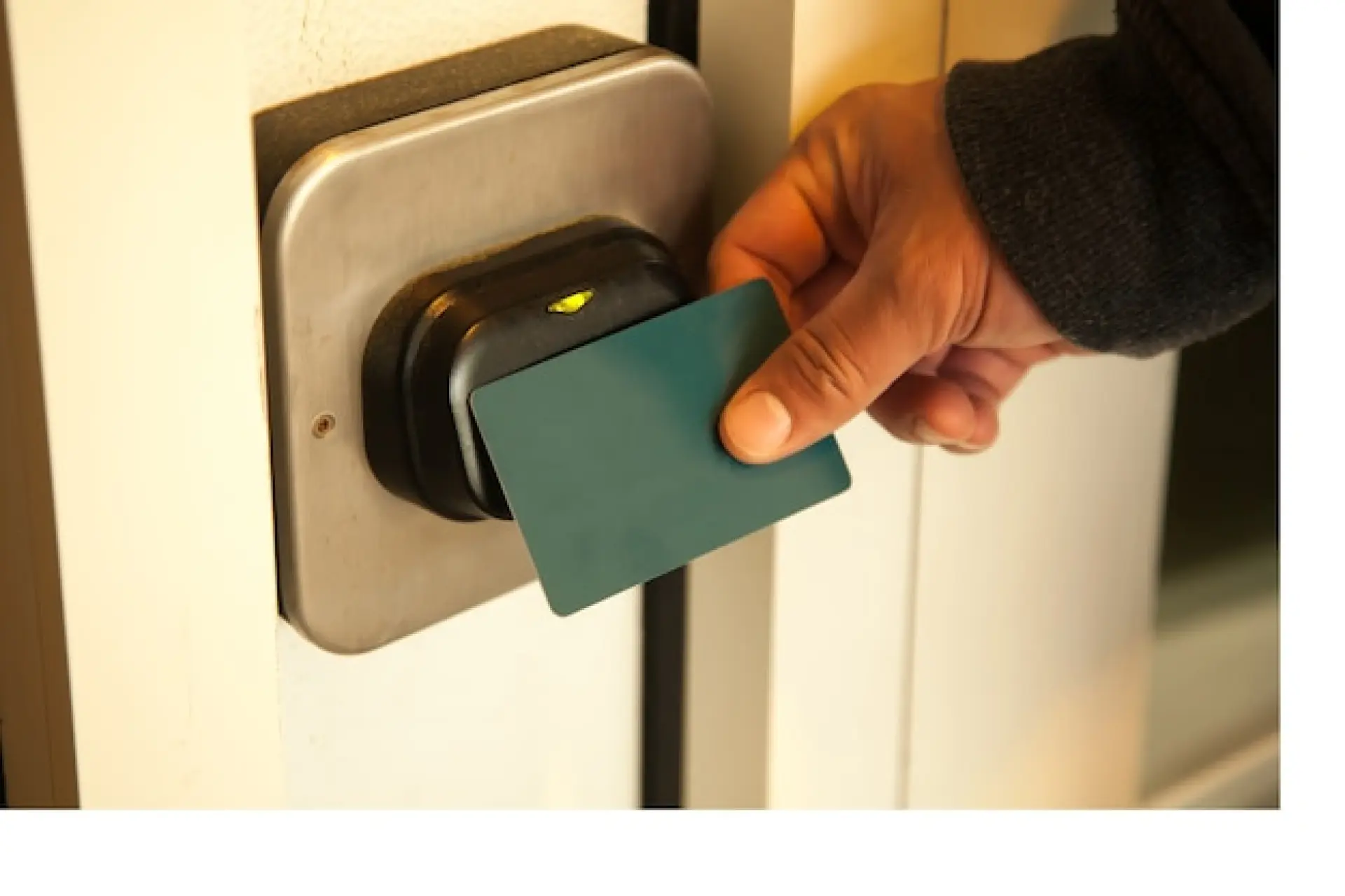
Physical access control limits access to buildings, premises, rooms, and facilities. It can use locks, doors, barriers, and access points such as a front door, a server room door, or a gated site entrance. Many businesses move from a simple lock and key to key cards, fobs, or biometrics, depending on their needs and risk level. For example, a staff member might use a fob to enter the workplace, while visitors are only allowed into a reception area.
Logical access control limits access to certain systems, data, and information. It checks a user’s credentials, such as a password, pin codes, or a fingerprint, before they can gain access. This helps reduce data breaches by ensuring only authorised personnel can access protected systems.
Most access control solutions bring these ideas together. Different systems may use cards, fobs, mobile devices, or biometrics, but the purpose is the same: to control access, protect resources, and keep the business secure.
Types Of Access Control
There are several types of access control, and many businesses use a mix.
Discretionary access control is when a person, often an administrator, decides who is granted access. This can work in smaller teams, but it can be harder to manage as a business grows.
Mandatory access control is stricter. Rules are set by the business, and users cannot change them. This approach is common in places with strong safety and security rules.
Role based access control, also called based access control, is a popular choice because it matches real working life. Access rights are granted based on a person’s role. For example, finance staff members can access payment systems, but they cannot enter the IT room unless it is required. Some rights reserved can be set for managers only, so control stays clear and simple.
The Benefits Of Access Control For Businesses
Stronger protection for people and property
A security system that controls entry helps keep the right people in the right place. It can limit access to sensitive areas such as stock rooms, IT rooms, and storage for expensive equipment. This lowers the risk of theft, damage, and unauthorised entry.
It also protects staff and customers. If something goes wrong, such as a threat on site, doors can be locked quickly, and alarms can alert staff. In some cases, access control systems can link to fire doors and safety systems, so people can still leave a building safely when needed.
Better Control Over Staff Access and Visitors
Access management makes it easier to manage staff members, contractors, and visitors. You can set who can enter certain areas, at what times, and through which doors. For example, a cleaner may need entry early in the morning, while office staff only need access during work hours.
Visitor control is also important. A visitors process can include checking identification, giving a temporary card, and limiting where that person can go. This helps ensure that visitors only access the areas they need, and it keeps the workplace safer for everyone.

Clear Records, Monitoring, and Real Time View
One of the biggest benefits of access control is the record it creates. Access control systems store events such as who entered, which door was accessed, and at what time. This can support investigations, reduce risk, and improve day to day management.
A good access control system can also give a real time view of activity across locations and buildings. This can be useful if you manage more than one site or if you want to know who is in the building during an emergency.
Reduced Risk of Lost Keys and Easier Changes
Traditional keys are easy to lose. If someone loses a key, you may need to change locks across the premises, which costs money and time. With key cards or a fob, you can cancel the lost credential and issue a replacement. This reduces the risk that someone will find the lost item and use it to enter.
It also makes changes easier when staff join, leave, or change role. You can update permissions quickly, without needing to collect keys from every door.
Support for Data Security and Fewer Data Breaches
Access control has a pivotal role in data protection. It helps ensure that sensitive information is only available to the right users. This is vital for customer details, employee records, and business plans.
Logical access control checks credentials and uses authentication steps before access is allowed. This can be a password, pin codes, or biometrics like a fingerprint. Some businesses add MFA, which means two or more checks are required. These security solutions help protect systems, reduce data breaches, and keep important information secure.
Better Compliance and Audits
Many industries must follow rules about safety, privacy, and data. Access control systems help with compliance because they can prove who had access, when, and why. If an audit happens, having clear reports and stored records can make the process smoother.
This is also useful for internal rules, such as limiting access to certain tools, rooms, or devices. It helps ensure that only the right staff can access protected contents, whether that is a data room, a cupboard with keys, or a system with customer records.
Improved Productivity and Smoother Working Days
Good access control can support productivity. Staff members can enter the areas they need without delays, and managers can handle changes without paperwork. This matters in busy workplaces where time is important, such as warehouses, shared offices, and buildings with many doors.
When access is set up well, users do not have to search for keys, wait for someone to unlock a door, or get stuck outside a room. It can also reduce disruption when staff move between areas during the day.
Access Control Features To Consider
When choosing access control solutions, think about what you need now and what you might need later. Systems allow you to start small and grow over time, but features can vary.
A key feature is permission control. You should be able to set permissions by role, by person, and by location. Another important feature is reporting, so you can track access across access points and find patterns that may show risk.
It is also worth thinking about integration. Many businesses want access control systems to work with other security systems, such as alarms, cameras, or entry phone services. Integration can help you manage everything in one place and respond faster when there is a problem.
A Simple Guide To Implementing Access Control
Start by mapping your building, site, and systems. Decide which areas are public, which are staff only, and which are sensitive areas that need extra protection. Then decide who needs access to certain spaces and at what times.
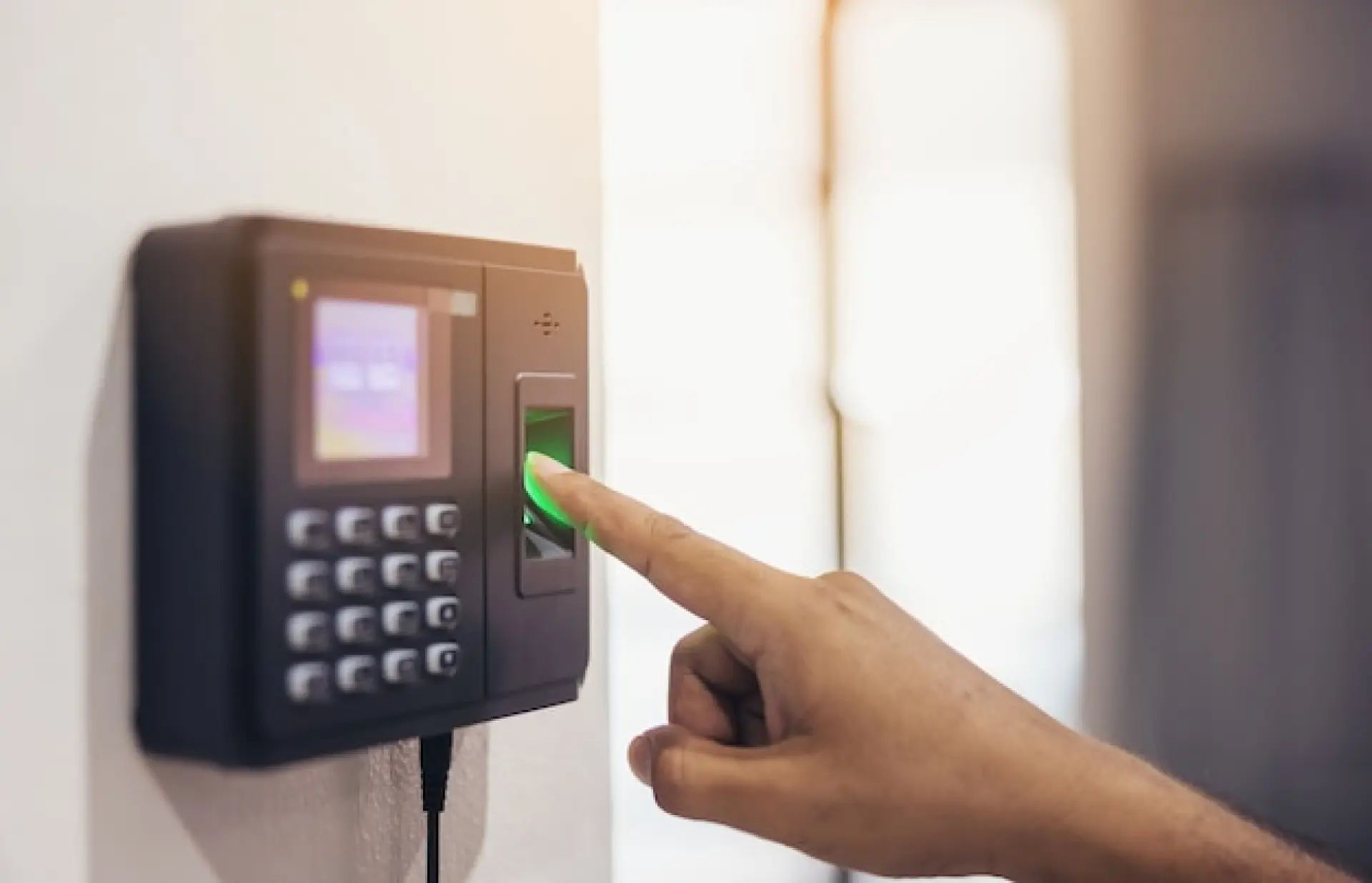
Next, choose the method that fits your workplace. Some businesses prefer key cards, some use a fob, and others use fingerprint readers or other biometrics. In many cases, a mix works best. For example, a key card may be fine for a main door, while biometrics may be better for a data room.
Finally, set clear rules for staff and visitors. Explain what to do if a card is lost, how to request access, and how permissions are approved. This helps ensure the system is used properly and stays secure.
Who Uses Access Control Systems?
Access control is used across a wide range of businesses and services.
Healthcare sites use access control to protect patient information, control entry to rooms, and keep equipment secure. Education sites use it to manage access across campuses and limit entry to certain areas such as labs and staff offices. Enterprise businesses often use it to protect customer payment data and reduce the chance of data breaches. Government buildings use it to control access, protect sensitive areas, and support strict security measures.
How Can A Business Benefit From Access Control
Access control is not only about locks and doors. It is a full approach to protecting people, property, systems, and data. The benefits of access control include safer premises, clearer control, better compliance, and easier day to day management.
If you want to enhance security, manage access for staff members and visitors, and protect sensitive information, access control systems are one of the most effective security solutions you can put in place.
Are you looking for an access systems installation in Ludlow and the surrounding areas of Shropshire? Contact our qualified electrician for domestic and commercial electrical services near you.